Did you know Siena almost built the largest cathedral in Christendom, but the Black Death stopped its stone dreams halfway through? That ambition captures the character of a city that isn’t frozen in time, but alive with ochre brick and limestone. When planning the things to do in Siena, you step into an urban fabric where Gothic design reached a level of perfection that still takes your breath away today. Here, the color known as “Siena earth” is the city’s skin, a tone that glows in the evening light and gives every narrow lane a special kind of magic.
If you’re after an authentic experience, understanding the things to do in Siena means grasping its historic rivalry with Florence, a competition that inspired monumental buildings and an unshakable local identity. In this guide, we’ll dive into the grandeur of its main square, the delicacy of its cathedral, and the spirit of its contrade — the neighborhoods that keep the passion for the Palio alive. Get ready for a journey where medieval architecture feels fresh and relevant, creating a setting that breaks every conventional mold.
The heart of the city: squares, towers, and civic power
To understand the scale of the things to do in Siena, the unavoidable starting point is the layout of its three hills, which naturally converge toward the city’s central hub of public power. This urban design makes the city feel like a natural amphitheater, where every street eventually leads to the place where social and political life has been thriving since the 12th century. Starting here calls for a close look at the harmony of the facades, but also a willingness to wander the slopes that hide Siena’s true essence.
The journey begins in the spaces that have hosted the region’s biggest celebrations in Tuscany. Siena isn’t a city of isolated monuments, but a whole in which the square, the town hall, and the tower form a perfect visual unit. Understanding this link between civic planning and Gothic aesthetics is the first step toward decoding all the things to do in Siena before heading up the hill where faith became marble in the cathedral.
1. Piazza del Campo: the stage of history
Considered one of the most beautiful squares in the world, this shell-shaped space is the absolute center of local life. When exploring the things to do in Siena, Piazza del Campo stands out for its red-brick paving divided into nine sections, symbolizing the “Government of the Nine” that ruled the city during its greatest period of prosperity. Its concave shape isn’t just beautiful — it also creates perfect acoustics and visibility for the famous Palio, the horse race that stops the city twice a year.
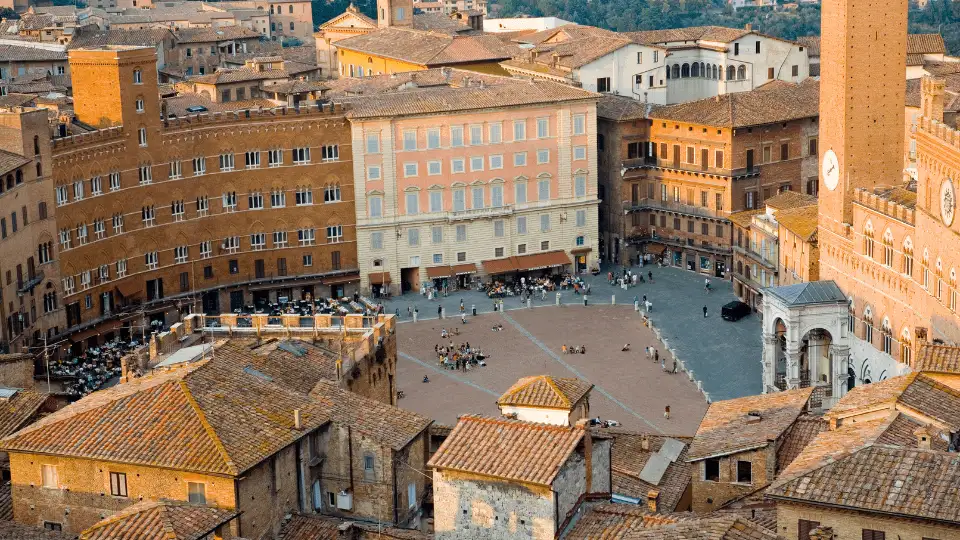
Sitting on the square’s sloping ground, as locals do, lets you notice the incline and how all the surrounding palaces follow a unified height and style. When deciding on the things to do in Siena, you’ll see there’s no flashiness here; architecture serves the shared space, creating an open-air living room where time seems to stand still. It’s the perfect place to understand how medieval engineering adapted to the hills to create a meeting point that still fills Sienese people with pride.
2. Palazzo Pubblico: the center of good government
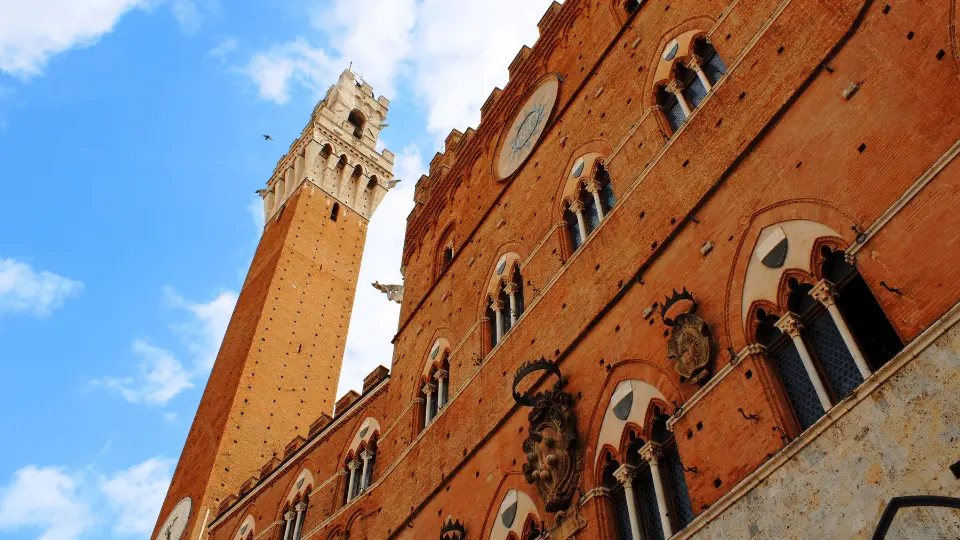
Standing over Piazza del Campo is this imposing brick-and-stone palace, which has housed the town hall since the late 13th century. When looking at the things to do in Siena, this building stands out for its elegant curved facade and triple-arched windows, which reflect the refinement of Sienese Gothic. Inside, the Civic Museum holds priceless artistic treasures, including Ambrogio Lorenzetti’s frescoes on the effects of “Good and Bad Government,” a lesson in politics and art that still feels remarkably current.
The palace’s function has evolved, but it still keeps its role as the administrative heart of the city. Planning the things to do in Siena means stepping into its rooms and seeing how art was not just decoration, but a way to communicate with medieval citizens. It’s a space of high ceilings and floors worn smooth by centuries of history, where every painting tells the story of a city that wanted to be the fairest and most beautiful in all of Italy.
3. Torre del Mangia: guardian of the skyline
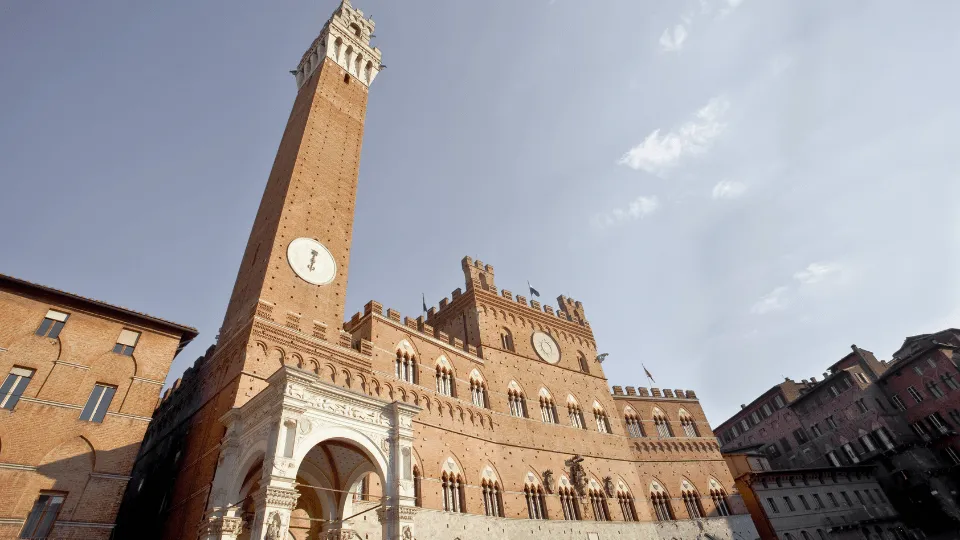
At 88 meters tall, this slender tower is the beacon for anyone searching for the things to do in Siena. It was built to match the cathedral bell tower exactly, symbolizing the equal standing of civic and religious power in the Republic of Siena. The name “Mangia” comes from its first bell ringer, Giovanni di Duccio, famous for spending all his money on food, and today its brick silhouette topped with white stone is the city’s most recognizable landmark.
Climbing its more than 400 steps is a physical challenge rewarded with the best panoramic view of Tuscany. When deciding on the things to do in Siena, looking out from the top helps you understand the city’s structure, with ochre rooftops and walls surrounded by olive groves and vineyards. It’s a vertical feat that shows the boldness of 14th-century builders, offering an aerial view of Piazza del Campo that reveals its perfect geometry.
Tips to travel with peace of mind
Connectivity: Forget about roaming. Get your eSIM with 2GB for FREE when buying your DareMapp audioguide [View conditions]
Travel insurance: Travel protected with IATI: Assistance 24/7 and advance
medical expenses coverage. Get a 5% discount here. [Take out insurance]
Documentation: Avoid surprises with visas or entry requirements. Check out this free tool👇
4. Siena Cathedral: the forest of white and black marble
The Cathedral of Santa Maria Assunta is, without a doubt, one of the most spectacular churches in Europe and an absolute highlight among the things to do in Siena. Its facade bursts with sculptures, mosaics, and details in pink, white, and green marble that seem to come alive in the sunlight. Inside, the visual impact is immediate: the striped white-and-black columns, the colors of the city, draw your eyes up toward a starry dome and a floor that is itself a work of art.
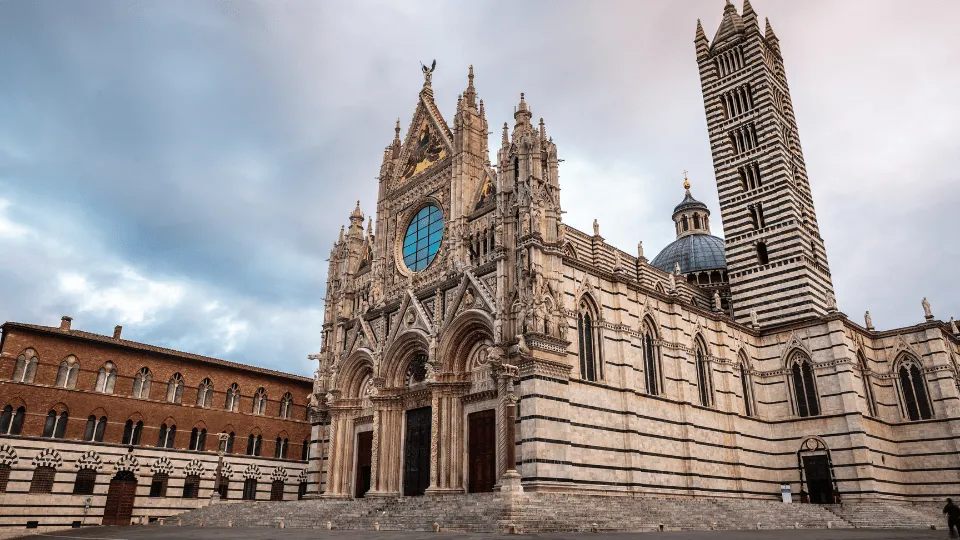
The cathedral pavement, made up of 56 inlaid marble panels, is one of the wonders that alone justify the visit. Exploring the things to do in Siena, you’ll discover that these panels tell biblical stories and allegories with astonishing technical precision. This is a temple that reflects the city’s wealth in its golden age, where every corner — from Nicola Pisano’s carved pulpit to the frescoes in the Piccolomini Library — celebrates human genius applied to spirituality.
5. Facciatone and the unfinished Duomo Nuovo
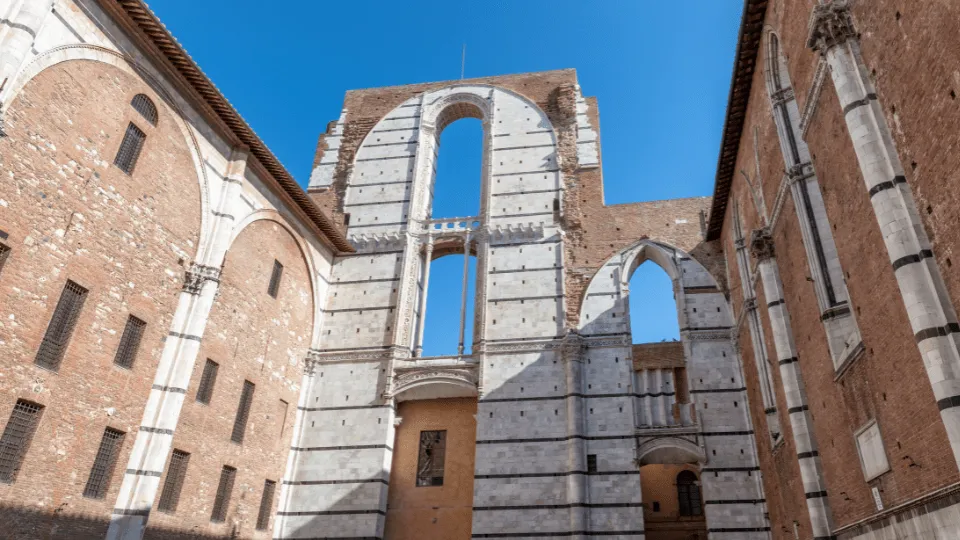
To the right of the current cathedral rises a colossal structure that looks like a lonely wall: the Facciatone. Among the things to do in Siena, this monument tells the story of the city’s interrupted ambition, when in the 14th century it planned to turn the existing cathedral into just the transept of a much larger church. However, the arrival of the Black Death in 1348 and structural problems brought the work to a halt, leaving this giant facade as a melancholy reminder of what might have been the largest church in Christendom.
Today, you can climb to the top of this unfinished wall and enjoy one of the city’s best viewpoints. Planning the things to do in Siena, this stop is essential for seeing the contrast between the solidity of stone and the emptiness of an abandoned dream. It’s a privileged lookout that lets you see the cathedral from the side, appreciating the complexity of its buttresses and the elegance of its dome, while the Tuscan wind reminds you how fragile empires — and their stone dreams — can be.
6. Piccolomini Library: a burst of Renaissance color
Located inside the cathedral complex, this small gem is one of the most vibrant surprises you’ll find when looking for the things to do in Siena. It was built to house the library of Pope Pius II and is covered entirely in frescoes by Pinturicchio, still glowing with a brilliance and intensity that make them look freshly painted. The scenes narrate the pope’s life with meticulous detail in clothing, landscapes, and architecture, transporting you straight into the splendor of the Italian Renaissance.
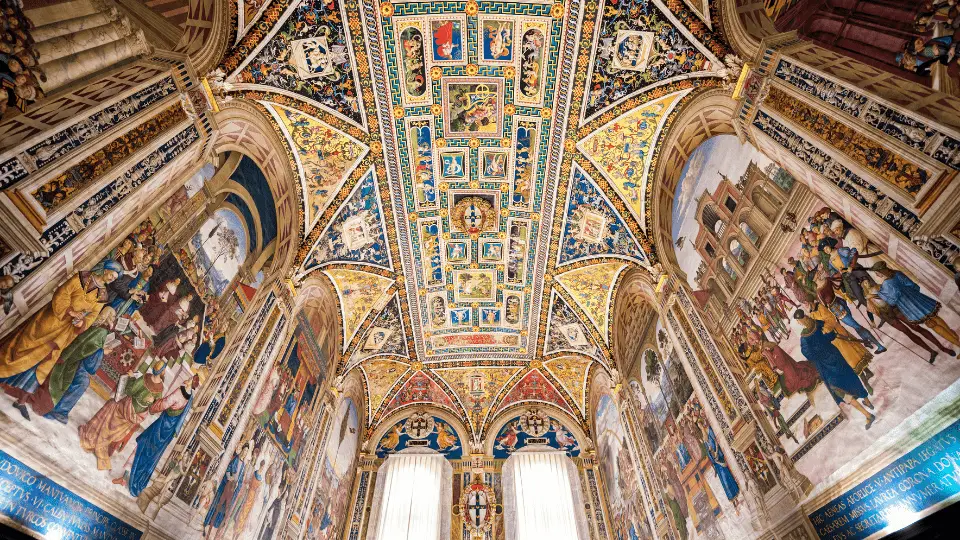
The harmony of the space is completed by illuminated musical manuscripts displayed in the central cases, whose notes seem to float under the gilded ceilings. When deciding on the things to do in Siena, spending time in this room is essential to understand the transition from Gothic to a more refined Renaissance style. It’s a room of concentrated beauty, where natural light enhances lapis lazuli blues and golds, creating an atmosphere of learning and majesty that leaves a lasting impression.
The DareMapp app makes it easy for you. Enjoy the complete guide on your mobile and experience every corner in a unique way. No set times – just go at your own pace.
7. Baptistery of Saint John: art beneath the cathedral
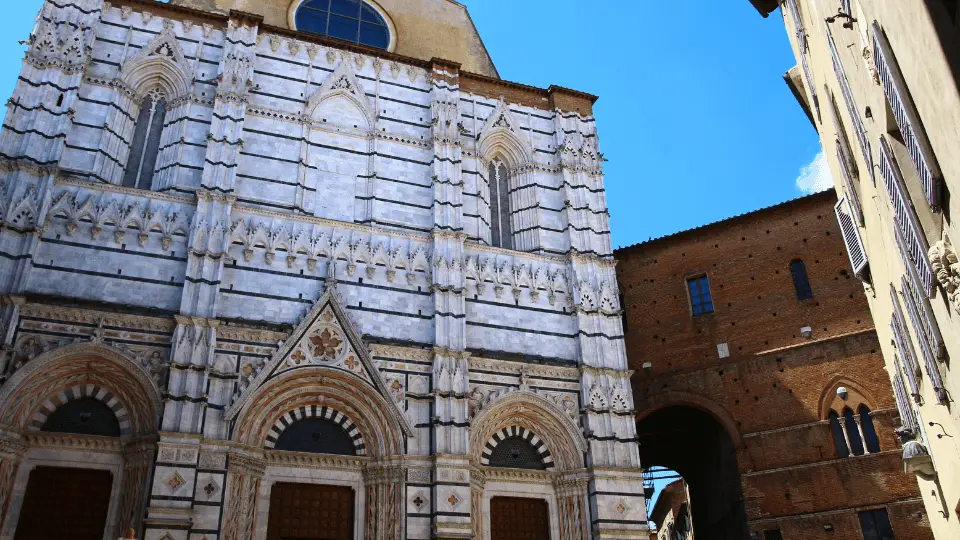
Because of the slope of the land, the Baptistery sits right below the cathedral apse, reached by a long marble staircase. Exploring the things to do in Siena, this space stands out for its monumental baptismal font, a collective masterpiece created with the help of masters such as Donatello and Lorenzo Ghiberti. The bronze reliefs decorating the font are landmarks of sculpture, showing the mastery of perspective and movement that marked the beginning of a new artistic era.
The baptistery vaults are completely covered in frescoes narrating the articles of the Creed, creating an enveloping and colorful environment. Planning the things to do in Siena, this stop lets you appreciate how the city used every square meter of its steep geography to build monumental spaces of devotion. It’s a peaceful corner where the murmur of water and the richness of the paintings invite reflection, away from the bustle of the upper squares but with the same historical weight.
8. Santa Maria della Scala: the hospital of memory
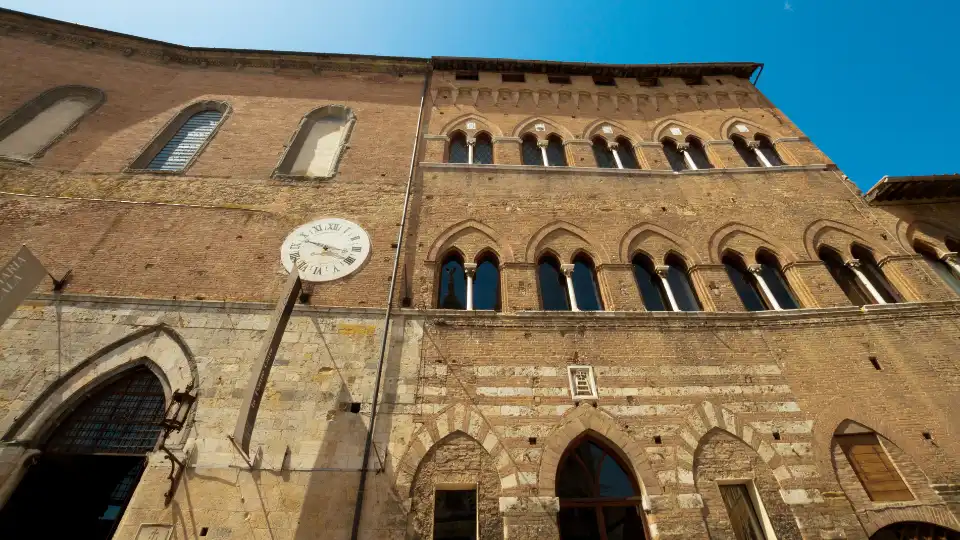
What was for a thousand years one of Europe’s oldest hospitals is now a fascinating museum complex. Located opposite the cathedral, Santa Maria della Scala is a must on any list of things to do in Siena if you want to understand the city’s more human and social side. In the “Sala del Pellegrinaio,” stunning frescoes show how the sick were cared for and pilgrims welcomed along the Via Francigena, offering a unique visual testimony of everyday life in the Middle Ages.
Exploring this building feels like walking through a labyrinth of tunnels carved into the rock that descend several levels underground. When deciding on the things to do in Siena, this site lets you discover ancient oratories and the original molds of the Fonte Gaia. It is a monument to charity and Sienese civic organization, where exposed brick and medieval structures blend with Roman archaeological remains, creating a journey through the layers of history that shaped the region’s identity.
9. Basilica of San Domenico and the relic of Saint Catherine
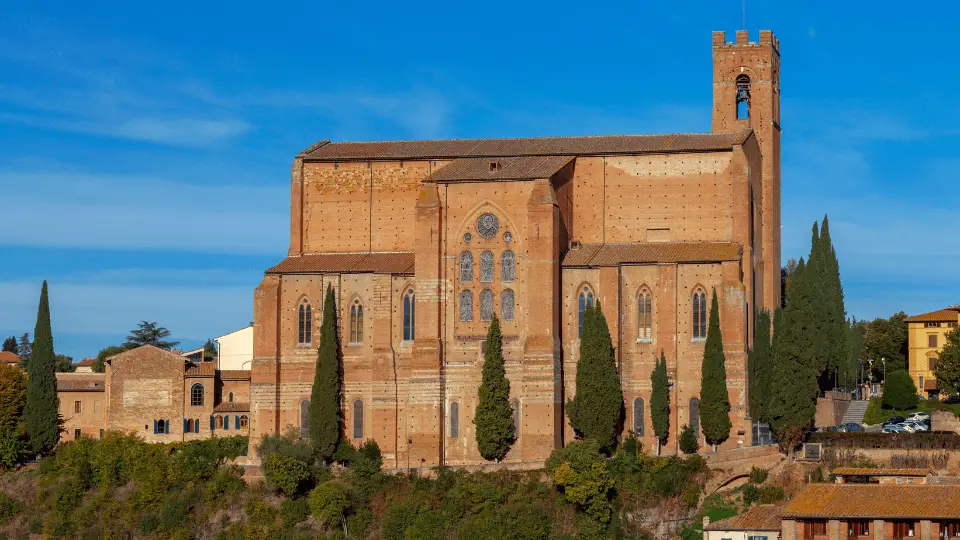
This brick church, sober and massive in appearance, stands on another of the city’s hills and is a key stop among the things to do in Siena because of its connection to Italy’s patron saint. Unlike the luxury of the cathedral, San Domenico breathes Dominican austerity, with a vast empty nave and light entering through its tall Gothic windows. Inside, it houses the relic of Saint Catherine of Siena’s head, an object of universal devotion and the center of a chapel decorated with emotionally powerful frescoes.
From the basilica’s exterior, you get one of the city’s most famous views, with the cathedral and tower outlined against the sky. Exploring the things to do in Siena, this landmark stands out for its strategic position, which once allowed the friars to visually dominate much of the urban area. It is a place of silence that invites you to learn about a woman who influenced kings and popes, reminding us that Siena’s importance was not only commercial or artistic, but also spiritual.
10. Medici Fortress: the stronghold of relaxation
Built by order of Cosimo I de’ Medici after Florence conquered the city, this fortress marks the end of the Sienese Republic’s independence. Exploring the things to do in Siena, the fortress stands out for its huge brick walls and corner bastions, designed more to watch over the city than to defend it. Today, though, its purpose has changed completely: its walls have become a public park where locals run, walk, and enjoy the views.
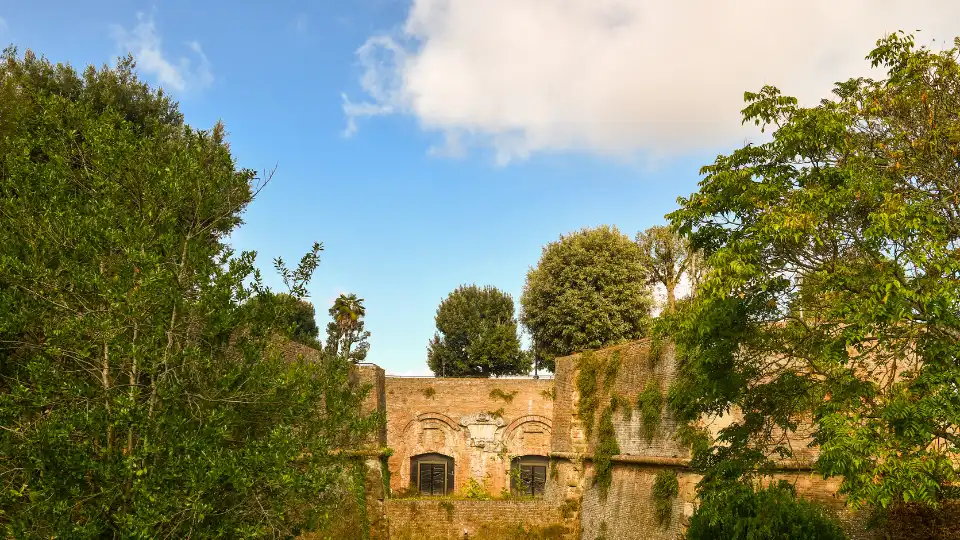
Walking along the top of the walls gives you a different perspective of the city, away from the monumental center. Planning the things to do in Siena, this space is perfect for an evening break, when the golden light illuminates the Torre del Mangia in the distance. The fortress also houses a famous national wine cellar in its underground rooms, linking 16th-century military architecture with today’s love for Tuscan wine in a setting that feels both solid and serene.
Museums and culture
Siena has a cultural density that shows in its ability to preserve ancient art while keeping neighborhood traditions alive. These spaces are essential among the things to do in Siena if you want to understand the city’s artistic and intellectual evolution.
Pinacoteca Nazionale: Located in Palazzo Buonsignori, it holds the most important collection of Sienese painting. When exploring the things to do in Siena, it stands out for works by Duccio di Buoninsegna and Simone Martini, where gold backgrounds and elegant lines defined a style of its own, distinct from Florentine realism. It’s the perfect place to see how the city developed a unique artistic sensitivity, marked by spirituality and delicacy.
State Archive of Siena: Housed in Palazzo Piccolomini, this archive preserves the “Biccherne,” the painted covers of the city’s accounting books since the 13th century. Exploring the things to do in Siena, this small museum offers a curious and detailed view of administrative and social life, where even taxes were recorded with art. It shows Siena’s obsession with documentation and beauty in every aspect of public life.
Museo dell’Opera del Duomo: This museum contains the original sculptures from the cathedral facade and Duccio’s famous “Maestà.” When deciding on the things to do in Siena, a visit here is essential if you want to observe up close the mastery of details that often go unnoticed high up on the church. From here, you can also access the Facciatone, combining great sculpture and great architecture in a single visit.
What to eat in Siena
The city’s cuisine reflects an environment shaped by chestnut forests, clay hills, and centuries of livestock farming. Planning the things to do in Siena means diving into rustic yet refined flavors, where extra virgin olive oil and Cinta Senese cured meats take center stage.

Pici all’Aglione: The province’s signature pasta dish. These are thick handmade noodles, somewhat like elongated gnocchi, served with tomato sauce and a special garlic from the Val di Chiana that is very aromatic but easy to digest. Exploring the things to do in Siena, tasting pici connects you with the oldest Tuscan cooking traditions, a simple preparation that depends entirely on the quality of the flour and careful hand kneading.
Siena Panforte: This traditional sweet dates back to the Middle Ages and packs a powerful mix of honey, nuts, candied fruit, and a secret blend of spices. When deciding on the things to do in Siena, trying a slice of Panforte takes you back to the crusades, when spices arrived in the city and were used to create long-lasting, high-energy foods. Dense and aromatic, it reflects the commercial history of a city that was once a major crossroads in Europe.
Ricciarelli: Soft almond cookies made with sugar and egg whites, oval in shape and dusted with powdered sugar. According to legend, Ricciarelli were brought by a Sienese nobleman who returned from the East with the recipe. Planning the things to do in Siena, these cookies are the perfect match for coffee or sweet wine, standing out for their delicate texture that melts in your mouth, and for being a symbol of fine pastry still made today using traditional methods in the ovens of the old town.
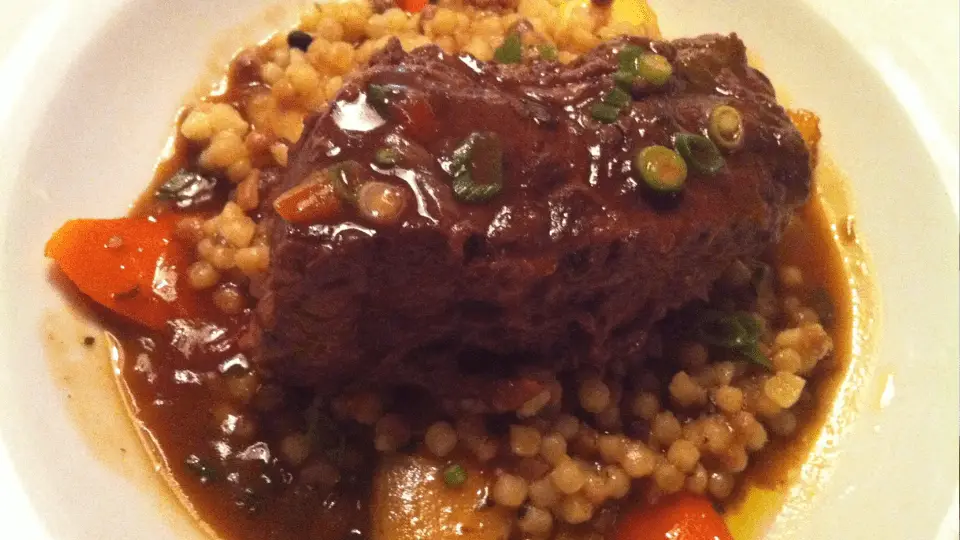
Scottiglia di Cinghiale: Wild boar is the king of the Sienese woods, and this stew is the best way to honor it. Cooked very slowly in red wine and spices, it stands out for tender meat and a wild flavor balanced by toasted bread or polenta. Exploring the things to do in Siena, this dish reveals the rougher, more authentic side of the province, a historic feast that has fed generations of families in the Tuscan hills.
Things to do around Siena
San Gimignano and its towers: Less than an hour away, this town is famous for its “medieval Manhattan” skyline. Exploring the things to do in Siena, this excursion stands out for the 14 towers still standing out of the original 72, built by noble families as symbols of power. It’s a trip into the past, where defensive architecture and Vernaccia white wine create a setting that feels like a historical film, offering the perfect contrast with Siena’s horizontality.
Val d’Orcia and Pienza: This region is the living image of the Tuscan postcard: cypresses, rolling hills, and stone villages. Planning the things to do in Siena, visiting Pienza lets you discover the Renaissance “ideal city,” designed by order of Pope Pius II with perfect geometry. The excursion is a must for enjoying a landscape declared a UNESCO World Heritage Site and tasting the famous pecorino cheese aged in the cellars of its streets.
Monteriggioni: A tiny walled village that looks like a stone crown on a hill. When deciding on the things to do in Siena, walking Monteriggioni’s walls helps you understand the military border architecture that protected the city from Florentine attacks. It’s an almost intact circular enclosure where time seems to have stopped in the 13th century, and whose silhouette was mentioned by Dante himself in the Divine Comedy, making it an unavoidable visual landmark of the countryside.
Abbey of San Galgano: Set in a lonely valley, this Gothic abbey stands out because it has no roof, letting you see the sky from its central stone nave. Exploring the things to do in Siena, this excursion offers a romantic and mystical architectural experience, complemented by the nearby small chapel that holds the real “sword in the stone” of San Galgano. It is a place of silence and legend where Cistercian engineering shows its most poetic and haunting side.
Five curiosities that change how you see Siena
The 17 Contrade: The city is divided into 17 neighborhoods, or contrade, each with its own coat of arms, flag, church, and museum. Exploring the things to do in Siena, you’ll discover that belonging to the Goose, the Snail, or the Dragon is not a choice, but a destiny that shapes social life, marriages, and rivalries throughout the year.
The Wolf of Siena: You’ll see statues of a she-wolf nursing twins all over the city, just like in Rome. According to legend, Siena’s founders were Senio and Asquio, sons of Remus, who fled Rome after their father’s murder, bringing the sacred wolf with them to found their own line in the Tuscan hills.
The Palio is not for tourists: Although it draws thousands of visitors, the horse race is a religious and civic ritual reserved for the Sienese. There is no cash prize; the winner receives a painted silk banner, the Palio, and eternal glory for their neighborhood. Understanding that it is a real, visceral passion helps you respect the tension that fills the city on race days.
Water under the city (the Bottini): Siena has no river, so medieval engineers built a 25-kilometer underground network of tunnels called bottini to bring water from distant springs. When planning the things to do in Siena, knowing that beneath your feet lies a brick “cathedral” built to feed the surface fountains gives you a new perspective on the tenacity of its people.
The color “Siena earth”: This reddish-ochre pigment was originally extracted from the iron-rich soil around the city. During the Renaissance, it became one of the most prized colors among painters across Europe. Exploring the things to do in Siena, you’ll realize the city itself is a monochrome painting, using the ground that supports it as a building material.
Best time to visit
Choosing the right moment depends on how you feel about crowds and how interested you are in traditions. Palio days (July 2 and August 16) are the most vibrant but also the most chaotic and hot; the city turns into a boiling pot of passion and it’s hard to move around the center. On the other hand, spring (April and May) and autumn (September and October) offer perfect walking temperatures and a light that highlights the surrounding vineyards, ideal for anyone looking for the things to do in Siena at a slower pace.
As for logistics, Siena is almost entirely pedestrian and has significant slopes. Comfortable shoes are a must, and you should be ready for constant ups and downs. The city is very well organized, but access by car to the historic center is strictly forbidden, so it’s best to park in the outer lots and use the escalators that connect them to the upper part. Siena is designed for pedestrians, ensuring that every step through its brick streets becomes an efficient discovery of Tuscany’s Gothic legacy. Have a great trip!
Remember that with DareMapp you can enjoy many guided tours in an interactive way. Fun tourism in the main destinations.
What better way to travel and discover a city than by learning in a fun way? Visit our blog to discover plenty of tourism tips.
Visit our social media channels and discover what to see in hundreds of cities.