Coimbra is not simply a stopover between Lisbon and Porto; it is a gravitational center of Portuguese intelligence and lyricism where the Mondego River and limestone define the academic landscape every day. When planning things to do in Coimbra, you encounter a challenging urban verticality: from the Alta (upper town), where centuries-old faculties dominate the skyline, to the Baixa (lower town), where traditional commerce survives in narrow streets of medieval origin. This city projects an atmosphere of solemnity that transforms daily life into a historical stage, where architecture has managed to adapt to the hillside with admirable structural resilience.
If you are looking for an authentic expedition, understanding things to do in Coimbra involves immersing yourself in an experience where intellect and melancholy converge. In this post, we delve into the power of its monumental university, the mysticism of its Romanesque monasteries, and the culture of Coimbra fado, a musical expression performed exclusively by men. Coimbra is a feast for those who value the architecture of knowledge, where the sound of the students’ black capes and the echo of the tower bells configure a journey that defies any conventional standard.
The academic core and the Baixa: The pulse of wisdom
To understand the magnitude of things to do in Coimbra, the most efficient axis is the ascent from the banks of the Mondego to the top of the university hill, a route that connects the most important institutional landmarks in Portugal. This trajectory allows you to observe the transition between the commercial city and the university precinct, always keeping the university tower as a visual reference. Starting this tour requires a mindset open to the physical effort demanded by its terrain, but with a plan that prioritizes historical order and respect for a heritage that is a UNESCO World Heritage site.
The journey begins in the lower town, an enclave that serves as a meeting center for the student community. Coimbra is not just a university city, but the place where Portuguese culture processes its history through law and literature, translating it into stone structures that defy the passage of centuries. Understanding this connection between education and architecture is the first step to deciphering all things to do in Coimbra before delving into the sobriety of its cloisters and libraries.
1. University of Coimbra and the Paço das Escolas
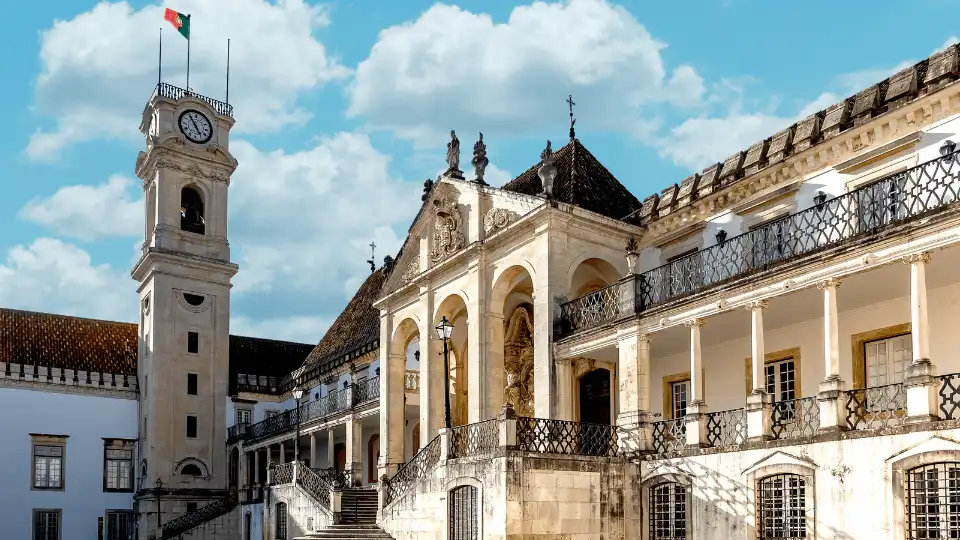
Located at the highest point, the University of Coimbra is one of the oldest institutions in the world. When researching things to do in Coimbra, the Paço das Escolas stands out as the heart of the complex, a monumental square flanked by buildings that narrate the evolution of royal and academic power. The architecture of this space allows you to observe the integration of styles ranging from Manueline to Neoclassical, configuring a precinct where limestone shines under the sun and academic ceremonies keep medieval protocol alive.
Access to this area allows you to contemplate the University Tower, whose clock has regulated the life of the city since the 18th century. When deciding things to do in Coimbra, observing the contrast between the rigor of the classrooms and the majesty of the Chapel of St. Michael reveals the importance of reason in state-building. It is an intellectual operations center where the design of public spaces fosters debate, establishing itself as the definitive architectural landmark in the center of the country.
2. Joanina Library: Baroque conservation engineering
Within the university precinct, the Joanina Library represents the perfection of 18th-century decoration and documentary preservation. When researching things to do in Coimbra, this building stands out for its thick-walled structure that maintains a constant temperature, protecting thousands of ancient volumes. The decoration, marked by exotic wood shelves and gilded frescoes, creates an atmosphere of opulence that sought to project the power of the Portuguese Empire under the reign of John V.
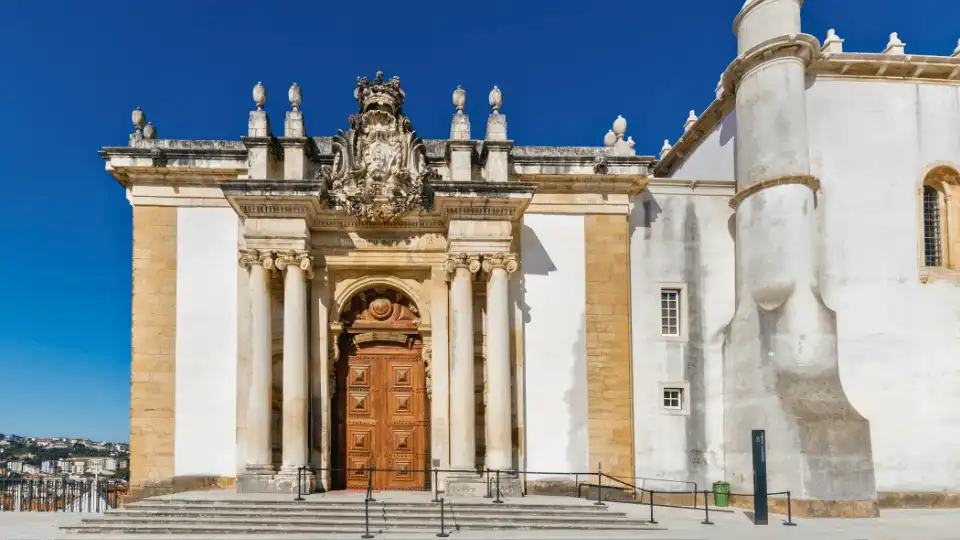
The functionality of the building goes beyond its aesthetics, including an underground floor that served as an academic prison. When planning things to do in Coimbra, this stop allows you to analyze how Baroque architecture was put at the service of knowledge to create a bibliographic protection structure. It is a space of silence where natural lighting is designed to prevent text deterioration, configuring one of the most striking interiors in Europe.
3. Sé Velha (Old Cathedral): The Romanesque bastion
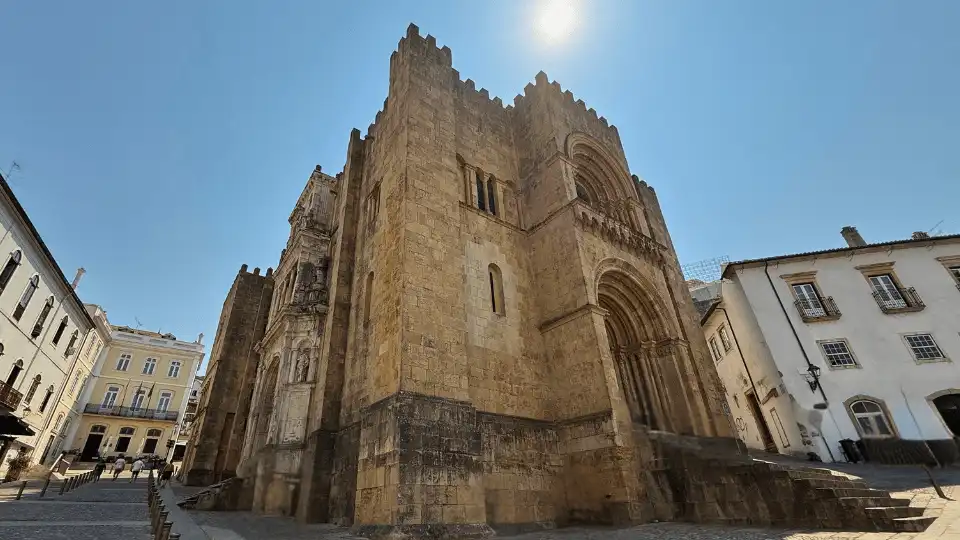
The Sé Velha is the purest example of Romanesque style in Portugal and a key point regarding things to do in Coimbra. Its fortress-like appearance, with crenelated walls and narrow windows, responds to the need for defense in an era of unstable borders during the Reconquista. When observing its main facade, one appreciates a geometric sobriety that contrasts with the refinement of its later Gothic cloister, offering a visual lesson on the evolution of religious architecture in the Iberian Peninsula.
The interior stands out for its flamboyant-style high altarpiece and the elevation of its central nave. When researching things to do in Coimbra, this cathedral allows you to understand the importance of the city as an episcopal and political seat. The golden stone of its walls seems to absorb light, creating an environment of recollection that witnessed the coronation of the first kings of Portugal, consolidating its status as a top-tier national monument.
Tips to travel with peace of mind
Connectivity: Forget about roaming. Get your eSIM with 2GB for FREE when buying your DareMapp audioguide [View conditions]
Travel insurance: Travel protected with IATI: Assistance 24/7 and advance
medical expenses coverage. Get a 5% discount here. [Take out insurance]
Documentation: Avoid surprises with visas or entry requirements. Check out this free tool👇
4. Monastery of Santa Cruz: The National Pantheon
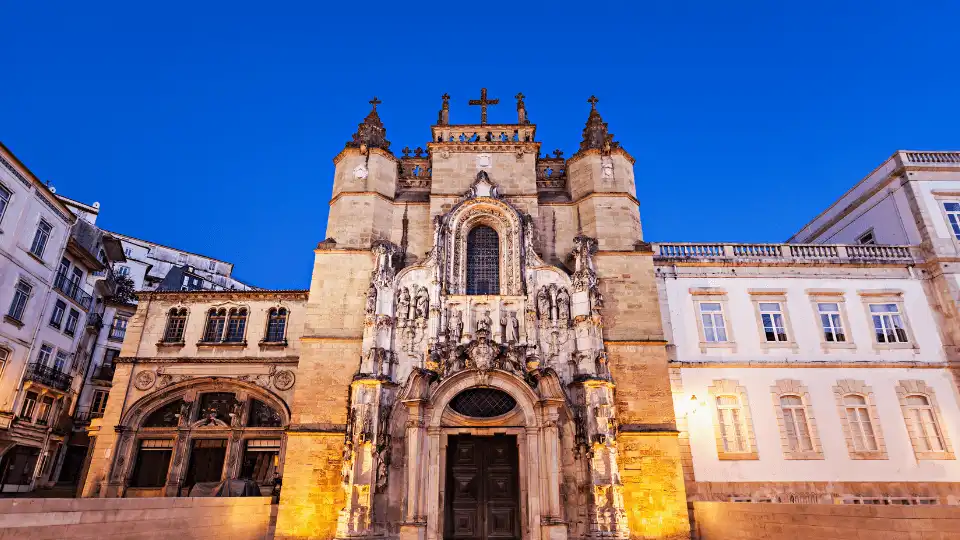
Located in the Baixa, the Monastery of Santa Cruz is fundamental to understanding the origin of the nation. When planning things to do in Coimbra, this building stands out for housing the remains of Afonso Henriques and Sancho I, the first two kings of Portugal. Its Manueline facade is a masterclass in stone carving, where nautical and plant motifs decorate the entrance to a space of great spiritual and political relevance for the kingdom.
The Cloister of Silence is one of the jewels of the complex, where the architecture invites introspection far from the commercial bustle. When deciding things to do in Coimbra, this monastery offers a detailed analysis of the transition from Gothic to Renaissance. The azulejos (tiles) decorating its naves narrate historical episodes with chromatic precision that defines Portuguese art, turning the visit into an incursion into the foundational pantheon of Lusitanian sovereignty.
5. University Botanical Garden: Science and biodiversity
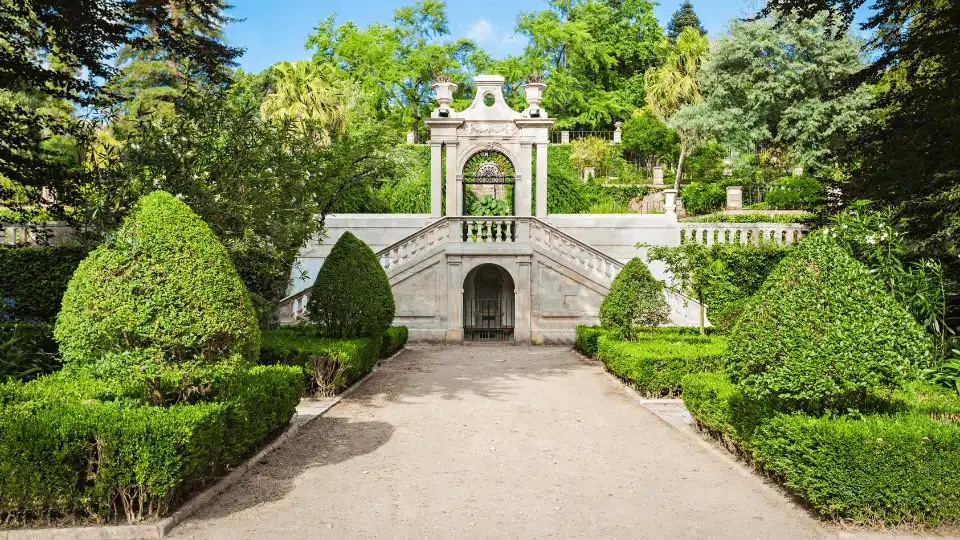
Founded in 1772 by the Marquis of Pombal, this space is one of the oldest botanical research centers in Europe. When researching things to do in Coimbra, this garden stands out for its terraced design that takes advantage of the hill’s slope to create different microclimates. Its main structure features a 19th-century iron and glass greenhouse, a jewel of industrial architecture originally designed for the acclimatization of exotic species brought from former colonies for scientific and pharmaceutical study.
The site functions as a living laboratory where botany is applied to the conservation of rare species from around the world. When deciding things to do in Coimbra, walking through its bamboo paths and linden-lined avenues allows you to observe the planning of an environment that unites landscape aesthetics with academic rigor. It is the city’s green lung, a place where water management and plant arrangement demonstrate the enlightened desire to catalog and understand the natural world right in the city center.
6. Monastery of Santa Clara-a-Nova: The Pantheon of the Holy Queen
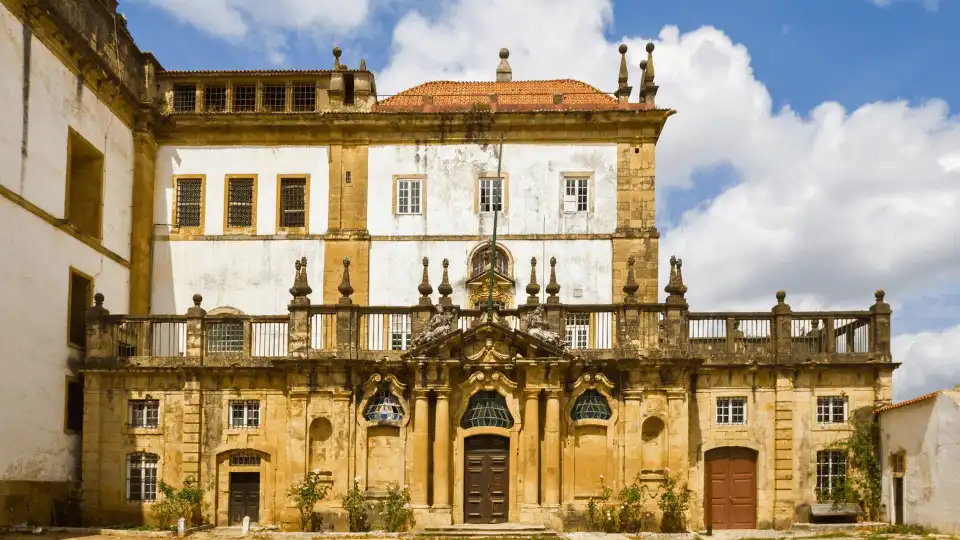
Located at the top of the hill on the left bank, this building was constructed in the 17th century to replace the old monastery affected by river floods. When researching things to do in Coimbra, this landmark stands out for housing the body of Holy Queen Isabel, the city’s patron saint, in an impressive silver and glass sarcophagus. The architecture of the complex is an example of Baroque sobriety and monastic functionality, designed to offer greater protection and stability against the unstable topography of the Mondego Valley.
The complex stands out for its monumental cloister, one of the largest in Portugal, which projects an atmosphere of peace and institutional rigor. When deciding things to do in Coimbra, visiting this monastery allows you to analyze the transition of the Poor Clare order to a higher, safer environment. In addition, its strategic location functions as an exceptional viewpoint, offering a complete perspective of the university hill and the old town, consolidating it as a fundamental point for understanding the religious and urban evolution of the city.
The DareMapp app makes it easy for you. Enjoy the complete guide on your mobile and experience every corner in a unique way. No set times – just at your own pace.
7. Portugal dos Pequenitos: Architecture to scale
This theme park, inaugurated in 1940, is a feat of pedagogical design and miniature work. When researching things to do in Coimbra, this space stands out for reproducing the most important monuments of Portugal and its former colonies on a reduced scale. It is not just a recreational place, but a volumetric analysis that allows one to appreciate the diversity of the country’s construction styles, from traditional regional houses to exact replicas of the great monasteries in the central area.
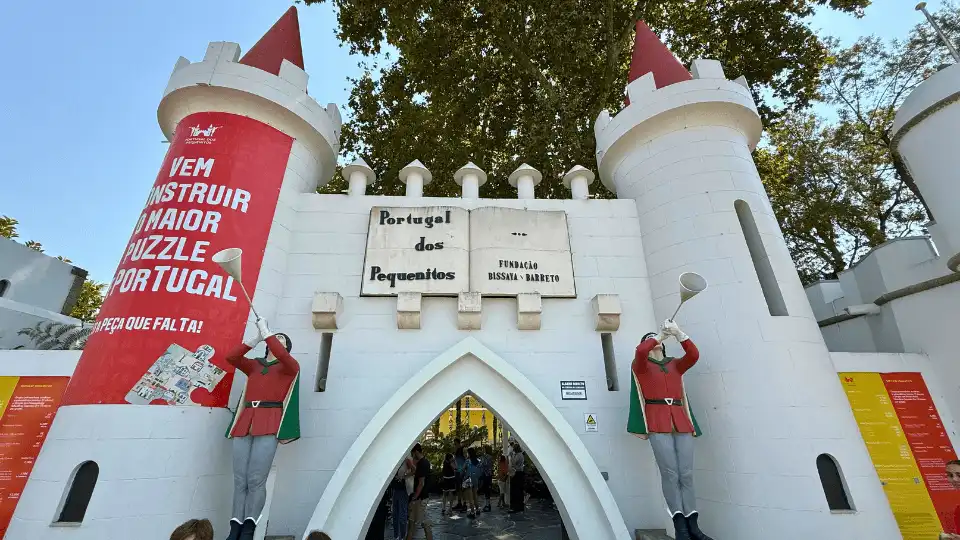
The construction of the miniatures shows a level of artisanal detail that respects the original materials. When planning things to do in Coimbra, this venue offers a global perspective of Lusitanian architecture in a single, controlled space. It is a stop that documents the Estado Novo‘s vision of national identity, functioning as an open-air architecture museum where the scale allows one to understand the proportions of the great landmarks of Portuguese heritage.
8. Sé Nova: The Jesuit architectural transition
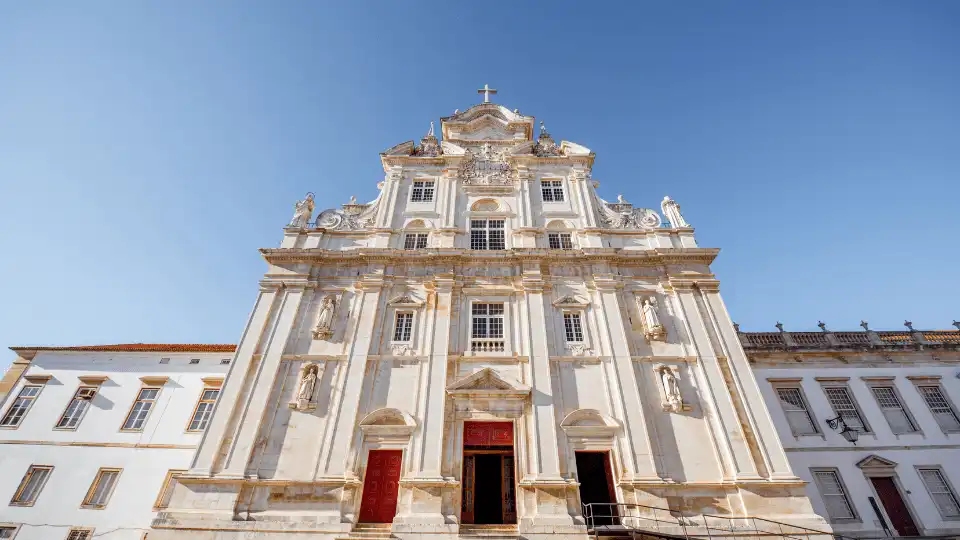
Located in the upper town, very close to the university, this cathedral was originally the church of the Jesuit College before becoming an episcopal seat. When researching things to do in Coimbra, the Sé Nova stands out for its imposing facade that combines the sobriety of Mannerism in its lower body with the dynamism of the Baroque in the upper part. Its construction, begun in the late 16th century, represents the power of the Society of Jesus in the education and religion of the kingdom, functioning as a visual landmark that dominates the access to the university courtyard.
The interior of the temple is an exhibition of breadth and light, where the side chapels and the gilded high altarpiece show the artistic richness of the viceregal period. When deciding things to do in Coimbra, this building allows you to observe one of the most impressive domes in the city, designed to project perfect acoustics during solemn ceremonies. It is a space that documents the change in religious hierarchy in the city, connecting the tradition of the major colleges with cathedral liturgy in an environment of great monumental value.
9. Penedo da Saudade: The students’ viewpoint
This park and viewpoint is the place where student nostalgia turns to stone. When planning things to do in Coimbra, the Penedo da Saudade stands out for its stone plaques with poems and verses engraved by generations of students saying goodbye to the city. From this elevated point, one gets a panoramic view of the Mondego Valley and the modern neighborhoods, offering a visual analysis of Coimbra’s urban expansion beyond its medieval historic center.

The atmosphere of the place is impregnated with Portuguese saudade, connecting directly to the local fado. When researching things to do in Coimbra, this viewpoint is the meeting point where the university’s literary tradition manifests in the public space. It is a corner of contemplation where limestone serves as a support for collective memory, consolidating itself as the stage where graduates pay tribute to their years of intellectual formation before leaving the city.
10. Arco and Torre de Almedina: The access to the walled city
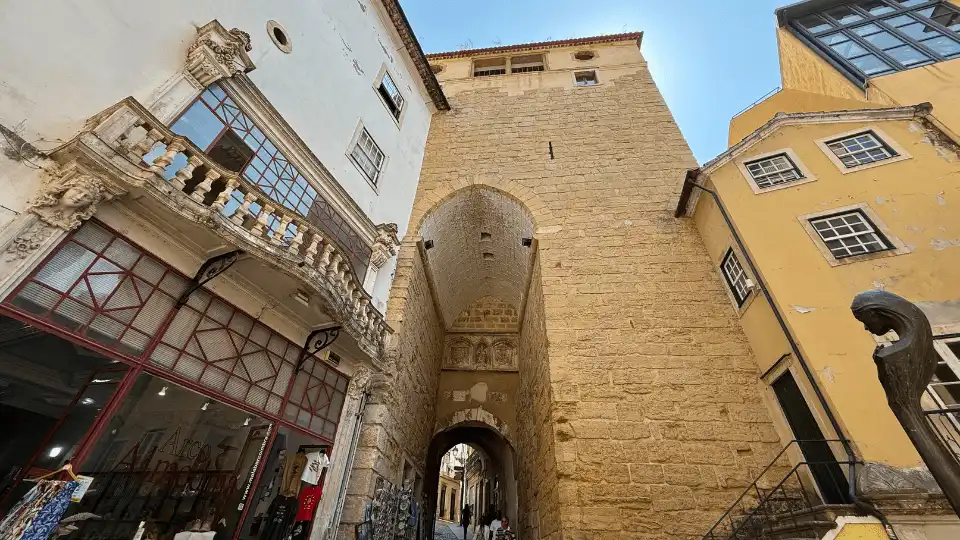
This structure represents the main landmark of the ancient medieval wall and the transition point between the commercial Baixa and the academic Alta. When researching things to do in Coimbra, the Arco de Almedina stands out for its defensive design of Islamic origin, later modified to adapt to the needs of the Portuguese crown. The tower that crowns it served as a surveillance center and today allows you to observe the urban stratigraphy of the area, where the narrow, steep streets of the Moorish quarter still preserve their original layout.
Passing through the arch is an immersion in the city’s military history, where limestone walls show the solidity of a fortification that protected the administrative core. When planning things to do in Coimbra, climbing the Almedina stairs allows you to analyze the verticality of the terrain and the constructive density of the old town. It is the threshold that connects two urban worlds, offering a unique perspective on Coimbra’s growth from its past as a frontier bastion to becoming a global center of knowledge.
🗺️Your guide to Coimbra, with Daremapp
📍More than 20 places of interest
🚀A route designed to make the most of your time
💡Recommendations, day trips & unique experiences
❓Questions, quizzes and over two hours of narrated content

Museums and Culture
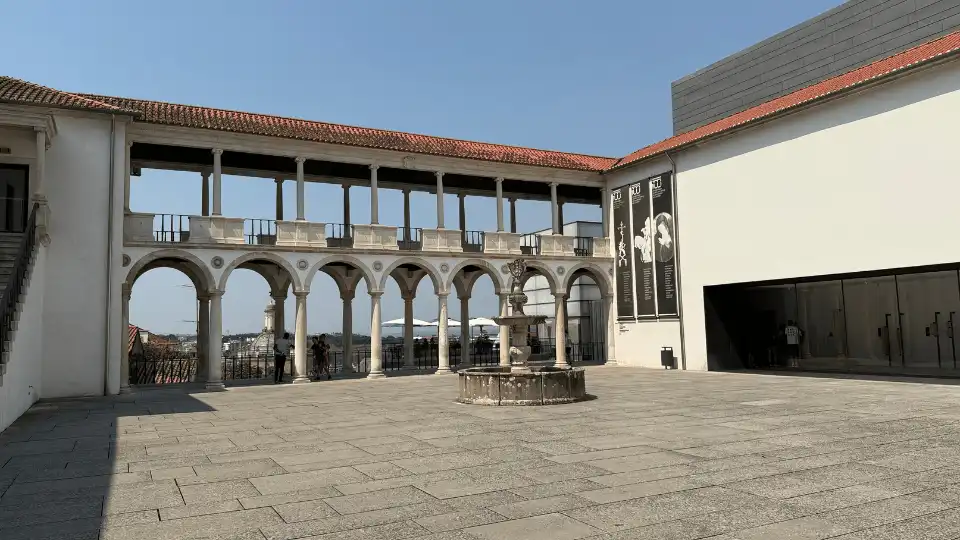
- National Museum Machado de Castro: Located over the ancient 1st-century Roman cryptoporticus, this is the definitive landmark for understanding the city’s stratigraphy. When researching things to do in Coimbra, this museum stands out for integrating the civil engineering of antiquity with an invaluable collection of medieval and Renaissance sculpture. The modern intervention of the building allows you to observe how contemporary concrete and Roman limestone coexist in perfect structural harmony. The underground tour of the cryptoporticus allows you to understand the magnitude of Roman urban planning. When deciding things to do in Coimbra, observing its Flemish imagery pieces and the late 15th-century clay apostolate reveals the high level of mastery reached by the local school of sculpture. It is a direct foray into the artistic DNA of Portugal, where each layer of the building narrates a stage of the city’s constructive evolution.
- University Science Museum: This center occupies the old Pombaline Chemical Laboratory, a building that marked a break with traditional scholasticism to embrace the experimental method in the 18th century. When deciding things to do in Coimbra, the museum stands out for its ability to exhibit collections of physics, zoology, and botany under a museography that respects the original Neoclassical furniture. It is a laboratory where the transition toward the Enlightenment is analyzed, showing scientific instruments that were fundamental for the development of modern knowledge.
What to eat in Coimbra
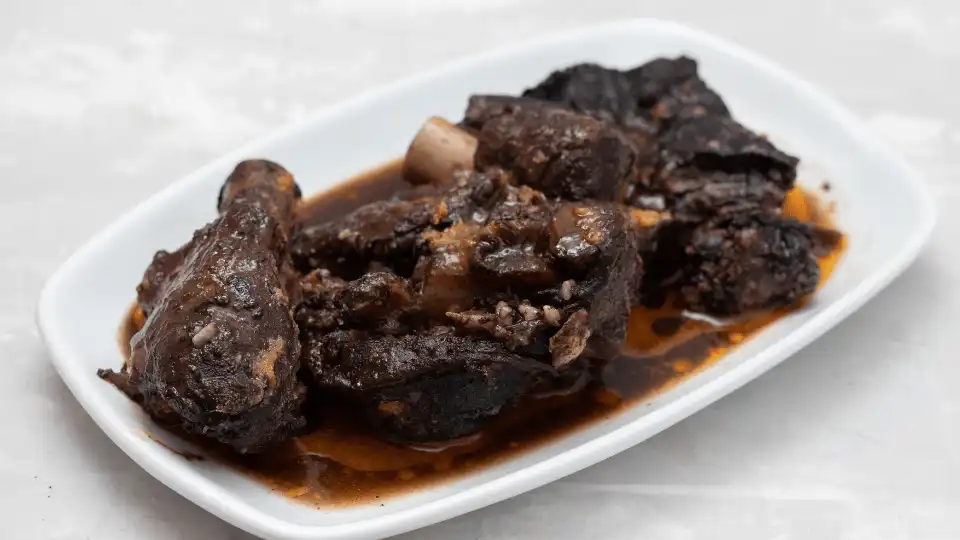
- Chanfana and Barro Negro: This dish is a feat of “resistance cuisine,” made with old goat meat cooked slowly in red wine inside black clay pots from Olho Marinho. When analyzing things to do in Coimbra, the chanfana stands out for its preparation process in wood-fired ovens, where the porosity of local ceramics allows for uniform cooking that transforms tough raw material into tender bites. It is an example of how traditional culinary engineering uses the earth’s resources to create flavors that have defined the diet of central Portugal.
- Leitão da Bairrada (Suckling Pig): Although originating from the neighboring region, it is a fundamental pillar on Coimbra’s tables due to its unique roasting technique in brick ovens. When researching things to do in Coimbra, the leitão stands out for the contrast between its crispy skin and its juicy meat, seasoned with a pepper and salt paste. This dish represents the excellence of Portuguese roasting, where fire control and cooking time are critical factors in achieving a texture that is a gastronomic reference throughout the country.
- Lamprey Rice and Mondego Fish: The river’s proximity has historically dictated a diet based on fluvial species, with lamprey being the most technical and exclusive product of the winter season. When planning things to do in Coimbra, lamprey rice stands out for the use of the animal’s blood to bind the sauce, following a highly potent medieval recipe. It is a dish that links the city to its aquatic environment, reflecting the importance of artisanal fishing in maintaining the culinary traditions of the Baixa.
- Pastéis de Santa Clara: Conventual pastry is a direct legacy of the nuns of the homonymous monastery. When researching things to do in Coimbra, the Santa Clara pastry stands out for its fine puff pastry filled with egg yolk and almond cream. These preparations demonstrate the sophistication that sugar reached after its arrival from overseas territories, becoming the strategic resource that allowed religious orders to finance their cultural and architectural influence for centuries.
Things to do in Coimbra: Excursions in the surroundings
- Conímbriga: The splendor of the Roman Empire: Located a few kilometers to the south, it is one of the most extensive archaeological sites in the Iberian Peninsula. When planning things to do in Coimbra, this stop allows you to observe the hydraulic engineering of noble houses, where gardens maintained active fountain systems two millennia ago. Its polychrome mosaics, with representations of hunts and mythology, show a level of detail that documents the wealth of the province of Lusitania, protected by a wall under which one can still walk through the original baths.
- Bussaco Forest and the Neo-Manueline Palace: This walled precinct was designed by the Discalced Carmelite monks as a spiritual retreat where exotic biodiversity served as a refuge for prayer. When researching things to do in Coimbra, the forest stands out for its unique microclimate and the Palace of Bussaco, a structure that represents the maximum expression of the Neo-Manueline style. It is a landmark where palatial architecture merges with a centuries-old plant mass, offering an analysis of the relationship between monarchical power and 19th-century religious mysticism.
- Schist Villages (Aldeias do Xisto): A short distance from the city are these settlements built entirely with schist stone, integrating organically into the Lousã Mountain Range. When researching things to do in Coimbra, these villages allow you to observe a resilient popular architecture that has survived geographic isolation. It is a fundamental excursion to understand the rural life of the central region, where dry-stone wall engineering and the use of forest resources configure a protected cultural landscape of enormous ethnographic value.
- Montemor-o-Velho: The fortress of the lower Mondego: This imposing castle dominates the rice fields of the valley and is one of the most relevant military structures in the region. When deciding things to do in Coimbra, the visit to its walled precinct offers a technical perspective on the defense of the territory during the Reconquista. The wall and the church of Santa Maria da Alcáçova allow for the analysis of the strategic importance of controlling the Mondego River’s path, serving as a natural viewpoint over the agricultural geography that surrounds the city.
Top 5 Curiosities that change your view of Coimbra
- The Coimbra Fado and masculine identity: Unlike the Lisbon style, this variant is performed only by men, usually students or alumni dressed in the academic black cape. When researching things to do in Coimbra, understanding this ritual is fundamental, as the singing is performed outdoors, under balconies, or in squares, maintaining a solemnity that defines the cultural character of the university city.
- The “Cabra” and schedule discipline: This is the affectionate name students give to the university tower bell, whose tolling regulated the start of classes and the curfew for centuries. It is an essential element in everything you should see in Coimbra, as its sound still marks the rhythm of academic life and symbolizes the historical control over time and study on the hill of wisdom.
- Costumes that inspired Harry Potter: The traditional student attire, consisting of a black cape and tie, served as a direct reference for the costume design of J.K. Rowling’s saga. When deciding things to do in Coimbra, walking through the Escadas de Minerva allows you to observe current students in this attire, creating an atmosphere that seems pulled from a literary work and that links Portuguese tradition with global popular culture.
- University Prison and legal autonomy: Coimbra houses the only university in Portugal that had its own jail under the Joanina Library to punish students and professors under internal laws. When planning things to do in Coimbra, this underground space stands out as a symbol of the independence of academic jurisdiction, demonstrating how the institution exerted absolute control over order and conduct within its walls.
- The Mondego, the river that is born and dies at home: There is a popular belief that this is the only major river that carries out its entire journey within Portuguese territory without crossing borders. In the list of things to do in Coimbra, the Mondego acts as the geographic axis that divides the city, flowing with a calm that defies the valley’s slope and offering the perfect mirror to reflect the silhouette of the university on the hilltop.
Best time to visit Coimbra
Choosing the right time for the expedition depends on your interests regarding things to do in Coimbra. The month of May is the most vibrant period due to the Queima das Fitas, the academic festivity where the city transforms into a stage of black capes and centuries-old traditions. Conversely, autumn (October and November) offers a golden light that highlights the texture of the limestone in the faculties of the Alta, making it the ideal season to capture the monumental essence of the area without the massive flow of summer visitors.
Regarding operational logistics, the city’s topography presents specific challenges that influence things to do in Coimbra. The city is divided into levels with steep slopes, which requires the use of footwear with high traction to walk safely on Portuguese cobblestones, especially when the humidity of the Mondego makes them slippery. To optimize movement between the Baixa and the University, using the market elevator facilitates the ascent, ensuring that physical effort translates into access to the best panoramic views of the city of knowledge. Enjoy your trip!
What better way to travel and discover a city than by learning in a fun way?
Visit our blog to discover a lot of tips about tourism.
Visit our social networks and discover things to do in hundreds of cities