Mont Saint-Michel is not just a monument; it is a geological marvel of granite that has withstood centuries of erosion. When planning things to do in Mont Saint-Michel, it is fascinating to understand that this crag is an igneous intrusion from 540 million years ago that survived while the rest of the valley disappeared underwater. This base of bedrock is what allows us, today, to admire an abbey of thousands of tons rising above a floor of apparently unstable sand and mud.
From a logistical point of view, the great modern challenge has been to restore the mount to its island essence. When researching things to do in Mont Saint-Michel, the new footbridge system and the Couesnon river Dam stand out. This civil engineering project has managed to make the currents flow freely again, dragging away the sediments that threatened to join the mount to the mainland permanently. It is a constant struggle between human technology and the force of the Atlantic tides.
Engineering of Nature: the rock that defies the sea
The Couesnon Dam: The Engine of the Bay
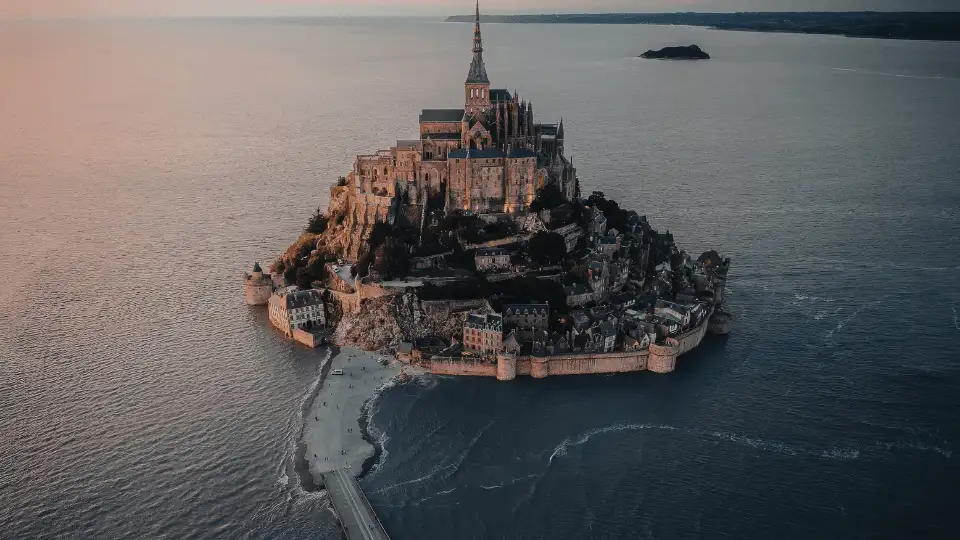
This dam is the technological milestone that has saved the Mount from land isolation. When looking for things to do in Mont Saint-Michel, its operation is a lesson in applied hydraulics: during high tide, the gates close to store water, and when the tide goes out, they open suddenly to create a natural “flushing” effect. This artificial current pushes the accumulated sand out to the open sea, ensuring that the water surrounds the crag periodically once again.
The Dam’s design also includes a footbridge that offers one of the best perspectives to understand the scale of the project. When researching things to do in Mont Saint-Michel, observing the flow of the Couesnon river from here helps to visualize how modern engineering can correct the mistakes of the past (such as the old causeway) to restore a dynamic ecosystem. It is the point where technology is put at the service of preserving historical heritage.
Dynamics of the Bay: The Water Spectacle
The bay is the stage where one of the most powerful natural phenomena in Europe occurs: tides with a range of up to 15 meters. When analyzing things to do in Mont Saint-Michel, it is vital to understand that the rising water is not just a rise in level, but a total transformation of the landscape in a matter of minutes. The speed with which the sea reclaims the land is such that the mount goes from being surrounded by kilometers of sand to being a solitary island in the middle of the ocean.
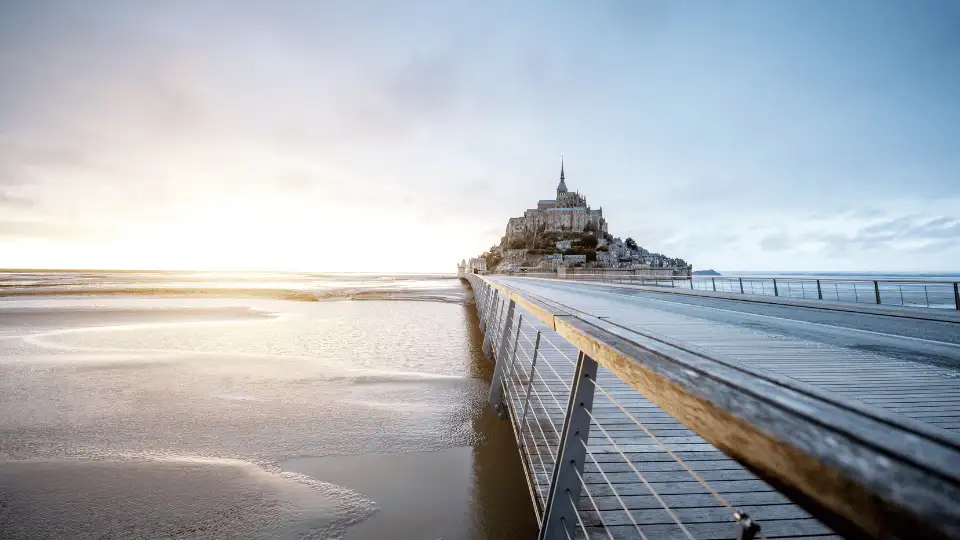
This environment is geologically complex due to the “tangue,” a mixture of sand and silt that can become unstable, leading to the famous quicksand. When deciding things to do in Mont Saint-Michel, the study of this terrain is fundamental for visitor safety. The salt marsh vegetation surrounding the area helps to stabilize the soil, creating a unique ecological balance that depends directly on the lunar cycle and marine currents.
Tips to travel with peace of mind
Connectivity: Forget about roaming. Get your eSIM with 2GB for FREE when buying your DareMapp audioguide [View conditions]
Travel insurance: Travel protected with IATI: Assistance 24/7 and advance
medical expenses coverage. Get a 5% discount here. [Take out insurance]
Documentation: Avoid surprises with visas or entry requirements. Check out this free tool👇
Porte de l’Avancée and Postigo de Fanils: Access and Supply Engineering
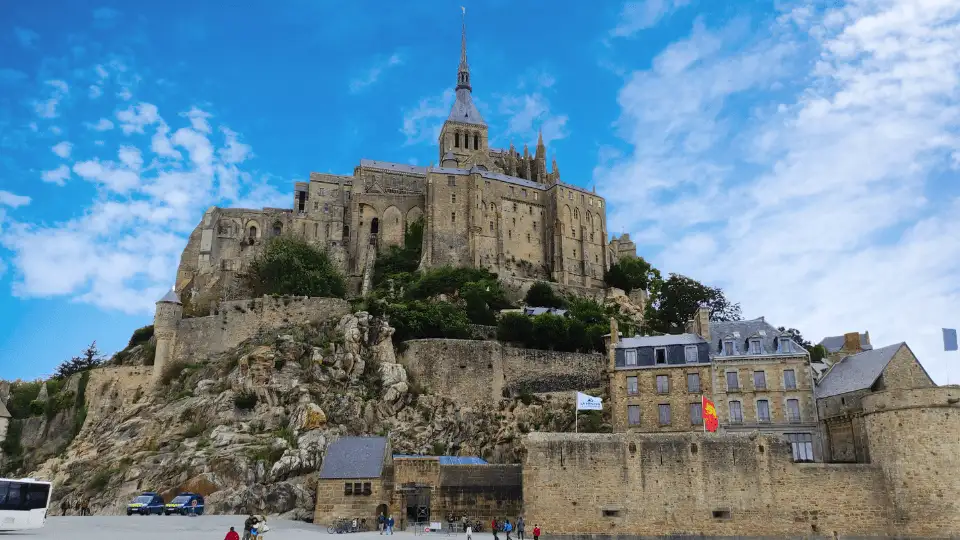
The Porte de l’Avancée constitutes the first logistical and defensive filter of the walled enclosure. When evaluating things to do in Mont Saint-Michel, this access stands out for its funnel design, projected to break the inertia of any incoming flow and protect the lower commercial area from the hydrodynamic pressure of the tides. Structurally, its granite masonry functions as a technical breakwater that preserves the integrity of the internal constructions against direct marine erosion.
For its part, the Enceinte des Fanils, located on the southern flank, represents a milestone in medieval supply engineering. When researching things to do in Mont Saint-Michel, this point reveals a tactical solution for discreet supply during periods of siege using hoisting systems anchored to the bedrock. This infrastructure allowed the entry of food and heavy materials from the bay without compromising the main gates, ensuring the mount’s operation under conditions of total blockade.
The Walls: Defenses and Military Resistance
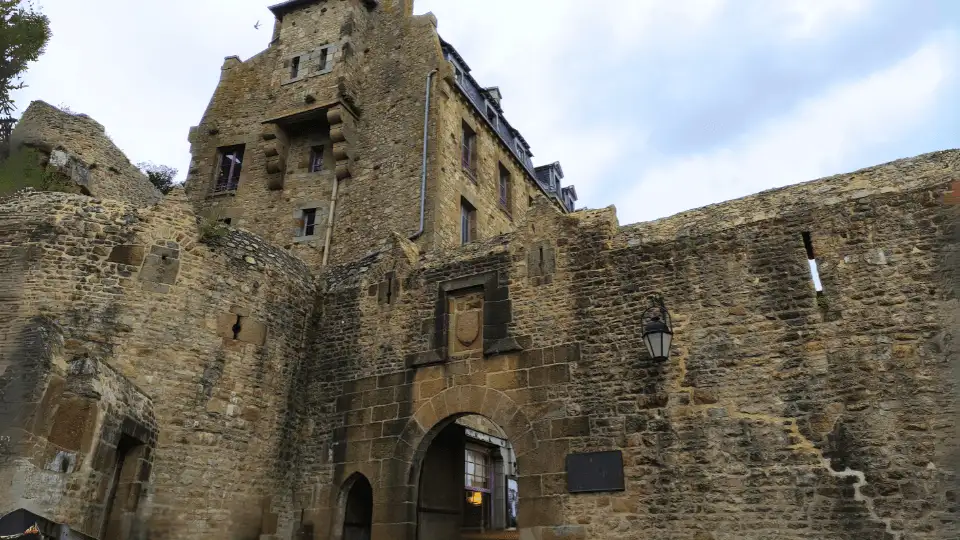
The walls of the Mont are not just a visual boundary, but a masterpiece of military engineering from the Hundred Years’ War. When researching things to do in Mont Saint-Michel, circular towers like the Liberty Tower show thick walls designed to absorb the impacts of the heavy artillery of the time. Their layout follows the natural line of the rock, taking advantage of the granite slope to make any enemy climbing attempt almost impossible.
The main access, the Porte du Roy, has a system of drawbridges and portcullises that functioned as security filters. When considering things to do in Mont Saint-Michel, walking along the wall walk allows you to appreciate the 360-degree strategic visibility over the bay. This tactical advantage, added to the natural barrier posed by the tides, turned the mount into an impregnable fortress that was never taken by English weapons.
North Tower: Perimeter Resilience and Strategic Surveillance
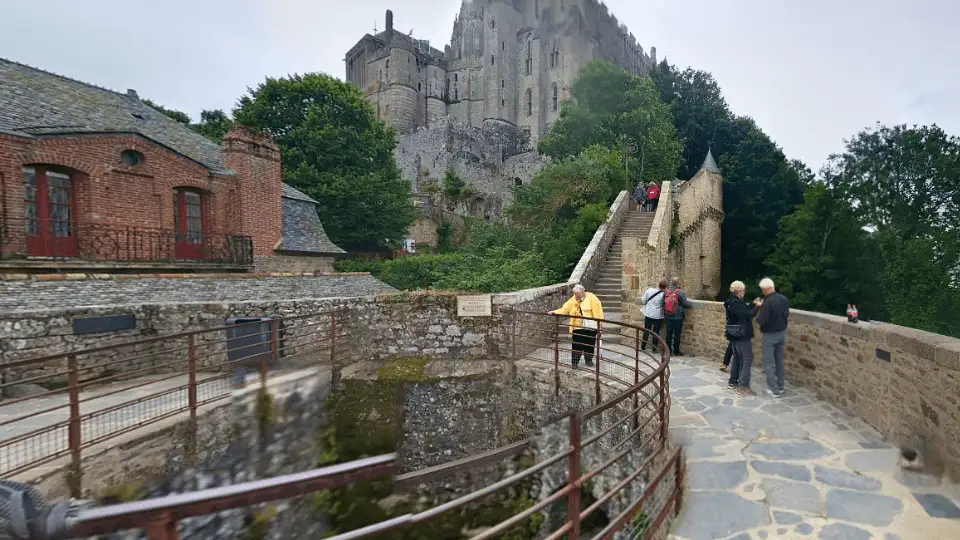
The North Tower is one of the most robust points within the defensive belt surrounding the crag. When researching things to do in Mont Saint-Michel, this tower stands out for its deep foundation, fused directly with the leucogranite to resist the constant pressure of the bay’s sediments. Its circular design is not just aesthetic, but a ballistic engineering solution designed to deflect projectiles and minimize the impact of the Atlantic winds that lash the northern face.
From an operational perspective, the tower’s top platform allowed for precise monitoring of tidal dynamics and quicksand banks. When considering things to do in Mont Saint-Michel, this landmark functioned as the tactical control center for the northern sector, offering 360-degree visibility essential for the enclosure’s security. The stability of its structure has allowed it to remain an immovable watchman against wind and marine erosion for centuries.
Grande Rue: High-Density Logistics and Critical Drainage
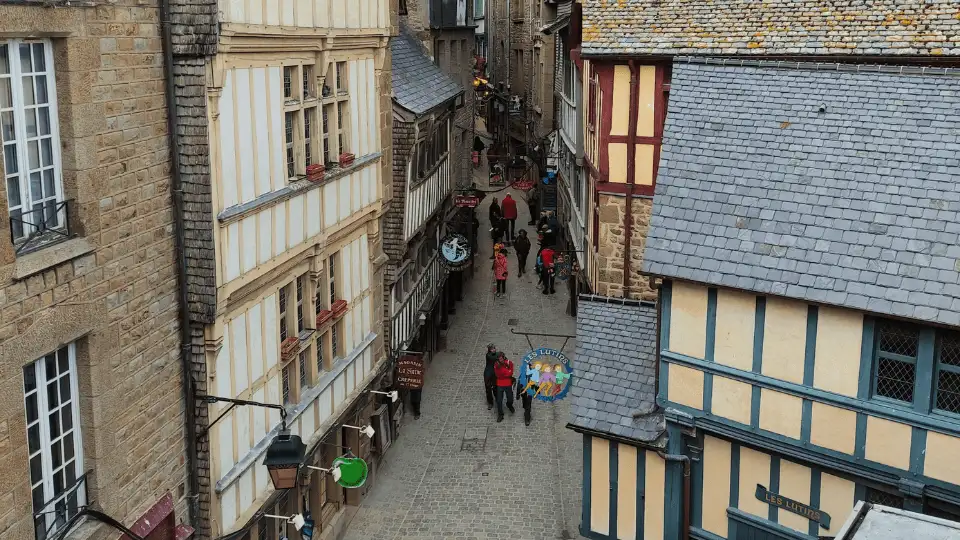
The main artery is the fundamental logistical channel that connects the base of the mount with the upper abbey. When analyzing things to do in Mont Saint-Michel, the Grande Rue must be understood as an infrastructure designed to manage massive flows of people on an average slope of 15%. Its winding path is not random, but responds to the need to soften the incline for the transport of heavy materials and reduce the speed of rainwater runoff.
Paving with rough granite cobblestones is an engineering solution to ensure mechanical grip and facilitate rapid drainage towards the lower channels. When looking for things to do in Mont Saint-Michel, the operational resilience of this path is surprising, having withstood constant traffic and mechanical erosion for more than five centuries without compromising its original foundation. It is, technically, the backbone that allows the daily functionality of this unique architectural complex.
DareMapp app makes it easy for you. Enjoy the complete guide on your mobile and experience every corner in a unique way. No timetables – just at your own pace.
Church of Saint-Pierre: Sacred Engineering and Adaptation to Granite
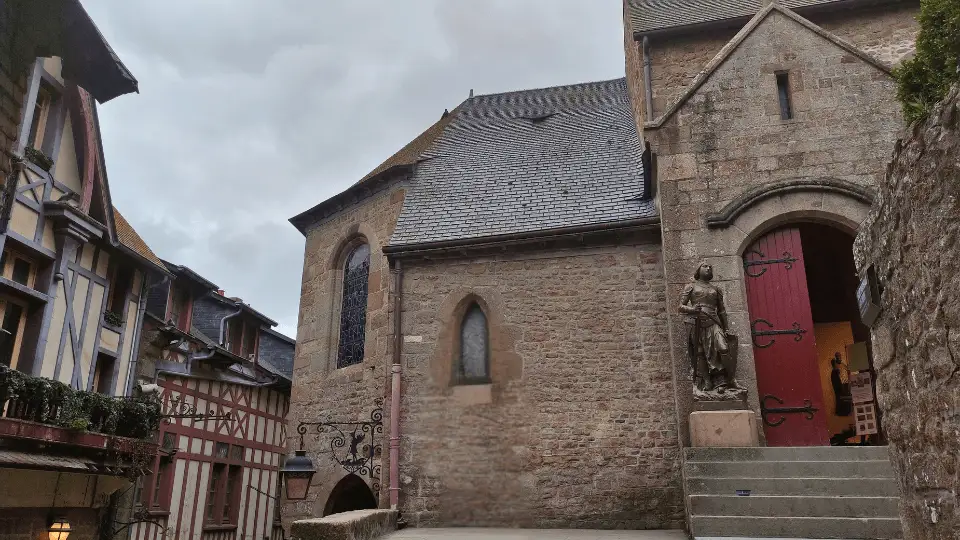
The Church of Saint-Pierre constitutes the spiritual core of the lower part of the crag, presenting a foundation challenge on a steep granite slope. When evaluating things to do in Mont Saint-Michel, this building stands out for its structure of irregular naves that adapt to the topography of the land, using thick load-bearing walls to compensate for the lateral thrusts of the upper rock. The use of local materials, mainly leucogranite, guarantees chemical and physical cohesion with the environment, allowing the structure to resist the persistent saline humidity of the English Channel.
From a technical perspective, the church acts as a thermal regulator for the resident community, thanks to the inertia of its thick stone enclosures. Researching things to do in Mont Saint-Michel, observing its wooden vault is fundamental, as it represents a lightweight engineering solution designed not to overload the foundations in an area of precarious balance. The arrangement of its openings allows for controlled overhead lighting, optimizing interior visibility without compromising the structural integrity of a building that acts as the link between the civic life of the Grande Rue and the upper abbey complex.
The Abbey of the Mont: A Giant over the Abyss
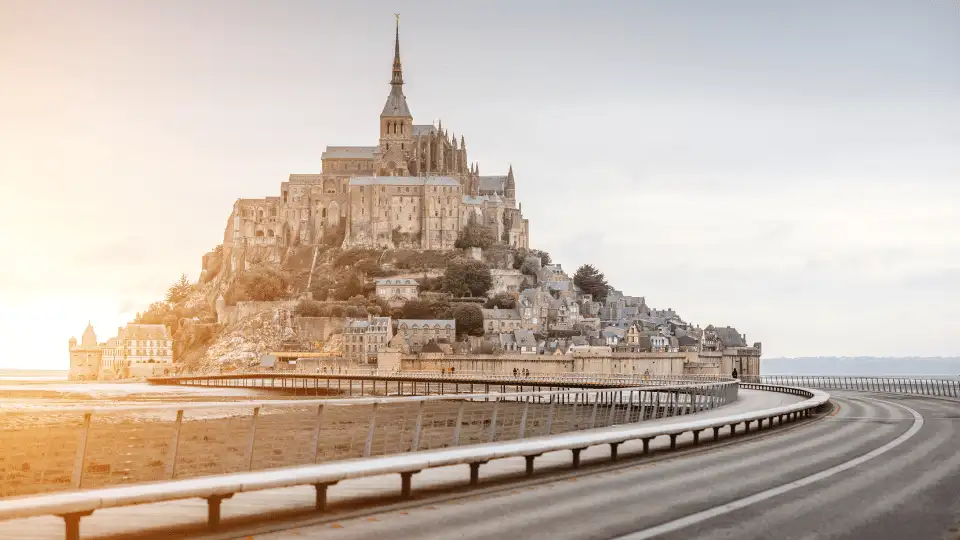
The abbey is the heart of any itinerary regarding things to do in Mont Saint-Michel. Its construction was an unprecedented structural challenge, as medieval architects had to build on the irregular top of the granite. To achieve this, they designed a network of underground crypts that act as artificial foundations, allowing the upper church to remain perfectly leveled. It is an early example of how architecture adapts to a hostile topography to reach impossible heights.
When observing the materials closely, one notes the use of granite from the Chausey Islands, an extremely hard stone chosen for its resistance to salinity. Considering things to do in Mont Saint-Michel, the logistics of hauling these stone blocks to the top still amazes: they used barges that took advantage of high tides and manual pulley systems. The result is a structure that is not only beautiful but has demonstrated enviable mechanical resilience against the storms of the English Channel.
Crypt of the Great Pillars: Structural Resilience
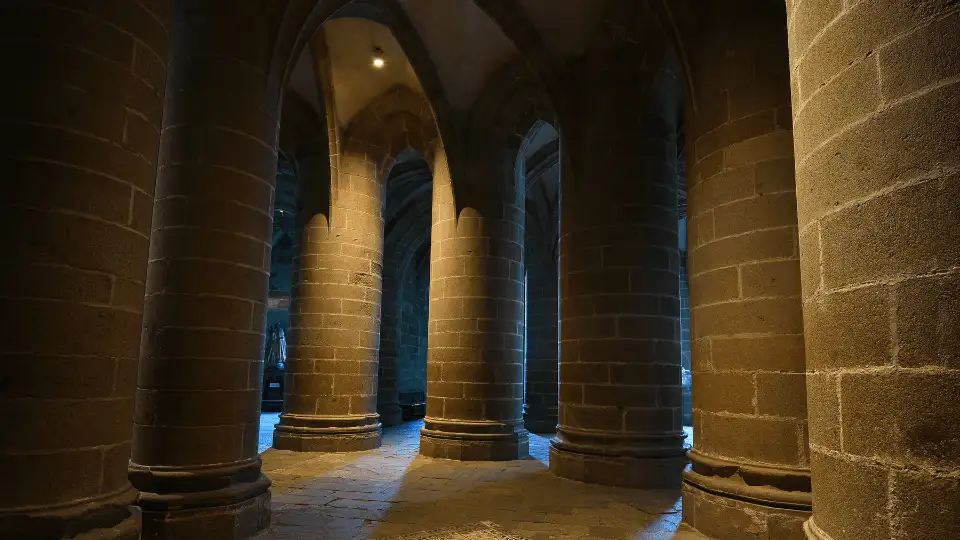
This crypt was built after a collapse in the 15th century to ensure that the new choir of the abbey would never fall again. When researching things to do in Mont Saint-Michel, the ten colossal granite pillars are the best example of reinforcement engineering. Each column is 5 meters in diameter and is designed to channel the compression forces of the upper church directly towards the core of the bedrock, guaranteeing absolute stability.
The atmosphere in this room is dense and cool, thanks to the thermal inertia of its massive walls. When considering things to do in Mont Saint-Michel, this technical section is what explains why the monument is still standing after hundreds of years of moderate seismic activity and strong winds. It is the point where the Flamboyant Gothic design meets the most robust foundation engineering of the Middle Ages.
The Cloister: A Garden in the Sky
Located 80 meters above sea level, the cloister defies the laws of construction logic. When evaluating things to do in Mont Saint-Michel, the most technical aspect here is the support system: since it is situated over lower rooms, it could not have a garden with heavy soil. Instead, a lightened structure with a cedar wood ceiling was designed to reduce the dead weight on the vaults of the lower room, known as the Hall of the Knights.
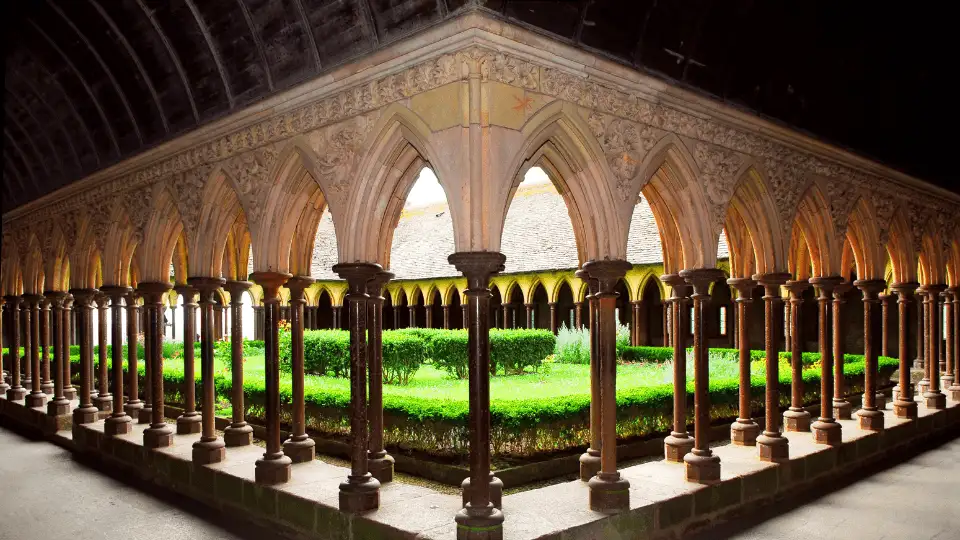
The columns of Caen limestone, brought from the mainland, allowed for carving details that the hard granite did not admit. When analyzing things to do in Mont Saint-Michel, the cloister functions as an oasis of silence where Gothic architecture reaches its maximum sophistication. The rainwater evacuation system is designed to prevent weight accumulation in the corners, channeling water towards external gargoyles that expel it far from the load-bearing walls.
🗺️Your route in Mont Saint-Michel, with DareMapp
📍More than 20 points of interest
🚀Optimise your time
💡Recommendations & the best plans
❓Q&A and more than 2h of content
Museums and Culture: Conservation and Science
- Scriptorial (Avranches): A few kilometers from the mount, this center holds the original manuscripts of the abbey. When looking for things to do in Mont Saint-Michel, it is a must-visit to understand modern preservation technology: display cases with controlled microclimates, UV light filters, and anoxia systems that protect thousand-year-old parchments. The analysis of these works reveals not only the calligraphy but the chemistry of the mineral and organic pigments used by the monks in the scriptorium, a testament to medieval science at its finest.
- Maritime Museum: This space focuses on the complex relationship between the crag and the marine environment of Normandy. It offers a detailed view of the hydraulic models used for the desilting of the bay, where one can study how fluid dynamics have been manipulated to save the monument. When researching things to do in Mont Saint-Michel, this museum is essential to understand the preservation of local fauna and the engineering that allows for the balance between mass tourism and the protection of an extremely fragile sedimentary ecosystem.
- Historical Museum: Located on the way up to the abbey, this space details the penal logistics of the 19th century, when the mount functioned as a prison. It is technical to observe how Gothic structures were adapted to house cells and workshops, in addition to exhibiting collections of ancient weapons and clock mechanisms that demonstrate the evolution of metallurgy in the region.
Gastronomy: Tradition and Biochemistry

- Mère Poulard Omelette: More than a recipe, it is an aerobic emulsion technique in a copper pan. By beating the eggs rhythmically and intensely, air is introduced into the protein structure, creating a consistent foam that expands under the heat of the wood fire. The result is an alveolar structure with a volume and texture not found in conventional cooking, where the thermal conductivity of copper is key to achieving a perfect outer seal without overcooking the core.
- Normandy Cider: Cider production in this area is based on the controlled fermentation of bitter and sweet apple varieties. It is a process of natural biochemistry where the selection of wild yeasts defines the body and effervescence of the drink. When evaluating things to do in Mont Saint-Michel, tasting the local product allows you to understand the interaction between the granite soil and the acidity of the fruit, resulting in a technical digestive ideal to accompany the fats of the lamb and Normandy butter.
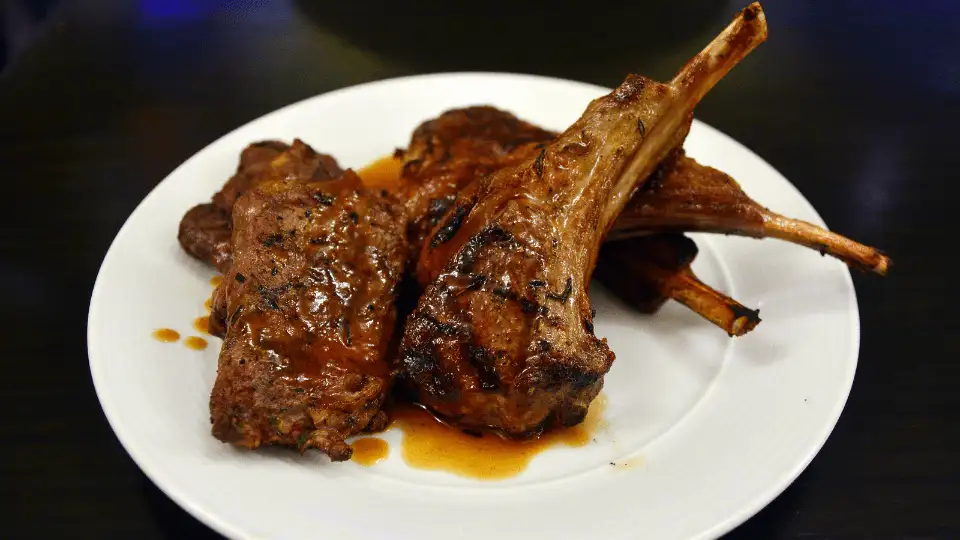
- Pré-salé (Salt Meadow) Lamb: When looking for things to do in Mont Saint-Michel, eating this lamb is a technical experience for the palate. The animals graze on land that the sea floods cyclically, which permeates the halophytes (salt-resistant plants like Salicornia) with minerals and iodine. This specific diet is transferred to the muscular tissue of the lambs, giving the meat a unique biochemical profile with a natural saline flavor and exceptional juiciness protected by the Protected Designation of Origin (AOP).
Top 5 technical curiosities: the engineering of Mont Saint-Michel
- Insularity by Design: Thanks to the new dam, the mount becomes an island again about 20 times a year during the great equinox tides. It is a phenomenon of “programmed insularity” through the control of the Couesnon river flow, returning the monument to its natural defensive function. When researching things to do in Mont Saint-Michel, this spectacle of hydraulic engineering allows you to observe how the technical manipulation of the landscape restores the original medieval aesthetic.
- Ancestral Granite: The crag is a rock of extreme hardness that has survived ice ages and the differential erosion that devastated the surrounding valley. Geologically, it is a pillar of Proterozoic leucogranite, making it an immovable structural anchor in a region dominated by soft sedimentary soils. It is a fundamental landmark for things to do in Mont Saint-Michel to understand the resistance of igneous materials against the advance of the sea.
- Aerial Maintenance: The statue of Saint Michael is a piece of engineering in itself, designed to be disassembled by air. In 2016, a helicopter removed the figure to renew its electrolytic gold layer and check its active lightning rod function, a precision operation necessary to protect the abbey. When deciding things to do in Mont Saint-Michel, the central spire stands out as a critical node of atmospheric protection and modern logistics.
- Foundation on Crypts: The abbey is, technically, a “floating” building on irregular rock. Its foundations are not made of solid stone, but consist of other churches and lower rooms built to level the terrain. These crypts act as a massive load distribution platform that allows for the verticality of the upper church, being one of the most fascinating structural secrets of things to do in Mont Saint-Michel.
- Medieval Drainage: The abbey’s gargoyle and channel systems are so efficient that, after 800 years, they continue to evacuate rainwater flawlessly. The design of these channels prevents infiltration by capillary action and the erosion of mortar joints. When analyzing things to do in Mont Saint-Michel, the efficiency of this water management demonstrates advanced knowledge of fluid engineering in stone constructions.
Logistics and practical data
Mobility and Infrastructure
To enjoy things to do in Mont Saint-Michel, access is managed from a logistics center on the mainland. From there, the electric shuttles Le Passeur circulate along the Feichtinger footbridge, an elevated bridge on thin pillars that minimize the impact on tidal currents. This engineering solution allows water and sand to pass underneath without obstacles, correcting the error of the old dike that was causing the silting of the bay. The flow of visitors is monitored to avoid saturation of the only access road, ensuring rapid evacuation if necessary.
Safety and Dynamic Environment
The bay is a changing and technically dangerous environment. When researching things to do in Mont Saint-Michel, remember that the ground has thixotropic properties (quicksand) and the water rises at an average speed of 6 km/h. Never walk on the sand without a certified guide or without consulting the official tide table of the French Navy. The combination of rapid fogs and the unforeseen rise in sea level represents a real physical risk that requires rigorous logistical planning on the part of the visitor.
Best Time to Travel: Atmospheric Analysis
The months of March and September are ideal due to the equinoxes, when tides with a coefficient higher than 100 occur, offering the greatest hydrodynamic spectacle. If you prefer to analyze the architecture with technical tranquility, winter offers a rawer and cleaner light for photography of Gothic structures, although it requires preparation for conditions of high thermal severity and gusty winds that can exceed 100 km/h on the upper spire. Traveling in the low season allows you to observe the interaction of the granite with the frost, revealing textures that summer light usually hides.
Remember that with DareMapp, you can take part in a wide range of interactive guided tours. A fun way to explore the main tourist destinations.
What better way to travel and explore a city than by learning in a fun way? Visit our blog to discover loads of travel tips.
Join our social media & discover more than 100 destinies